Step 1
Cut and center the fabric
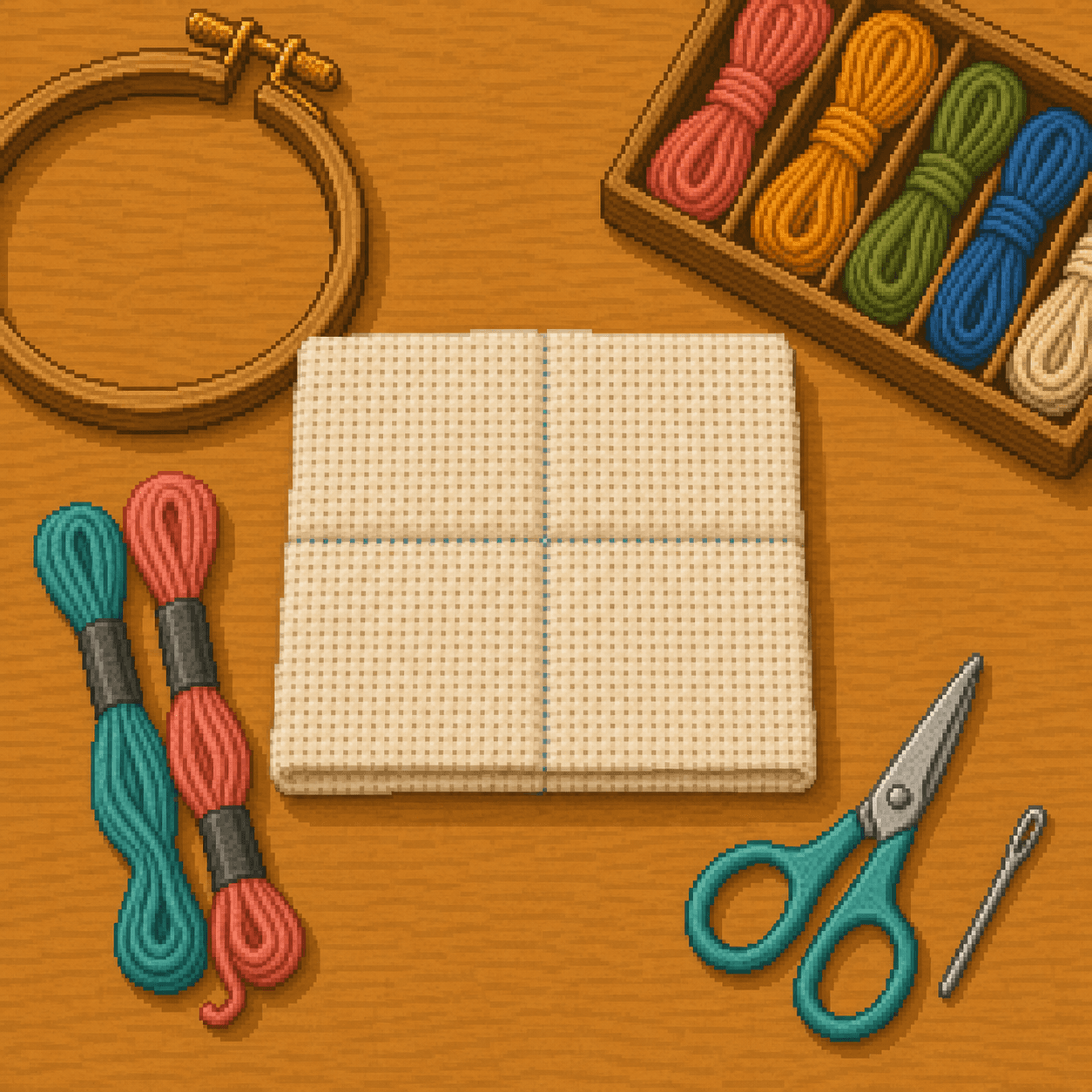
Cut fabric with extra margin around the design so you have room for framing or finishing. Fold the fabric gently in half both ways to find the center, or start from a known corner if the pattern allows it.

Cross Stitch Patterns
New to cross stitch? This guide shows you how to turn an 8bit Crafts pixel pattern into a finished stitched project using Aida cloth, embroidery floss, and simple X-shaped stitches. You'll learn how to prepare your fabric, separate floss, read a gridded chart, stitch clean color blocks, and finish your project.
This guide is one way to complete the pattern. Start simple, count carefully, and experiment as you get more comfortable. When you finish your project, share it with us at 8bitcrafter on Facebook or 8bitcraftkits on Instagram.
Cross stitch uses X-shaped stitches on an even grid. Each square on the pattern chart usually matches one stitch on the fabric, which makes pixel-style patterns a natural fit for cross stitch.
Aida cloth is the easiest beginner fabric because the holes are visible and evenly spaced. Fabric count tells you how many stitches fit in one inch. For example, 14-count Aida has 14 stitch squares per inch and is a good beginner choice.
Embroidery floss usually has six strands. Most beginner cross stitch projects on 14-count Aida use two strands, but always follow the pattern instructions when they are provided.
Use a blunt cross stitch or tapestry needle so the needle slides through the Aida holes instead of splitting the fabric threads.
Clean cross stitch comes from consistent stitch direction, gentle tension, careful counting, and ending thread neatly on the back.
Pattern Basics
Each square on an 8bit Crafts pattern chart equals one cross stitch on your fabric. Match the chart color to the floss color and stitch one square at a time.
For beginners, it usually helps to start near the center of the pattern or from a known corner if the pattern allows it. Work in small sections and check the chart often so you can catch counting mistakes early.
If two floss colors look similar, label them before you begin. This makes it easier to follow the chart and avoid replacing stitches later.
Setup
Set up your fabric, floss, needle, and chart before you begin. A clean setup makes the pattern easier to follow and helps your stitches stay even.
Step 1
Cut fabric with extra margin around the design so you have room for framing or finishing. Fold the fabric gently in half both ways to find the center, or start from a known corner if the pattern allows it.
Step 2
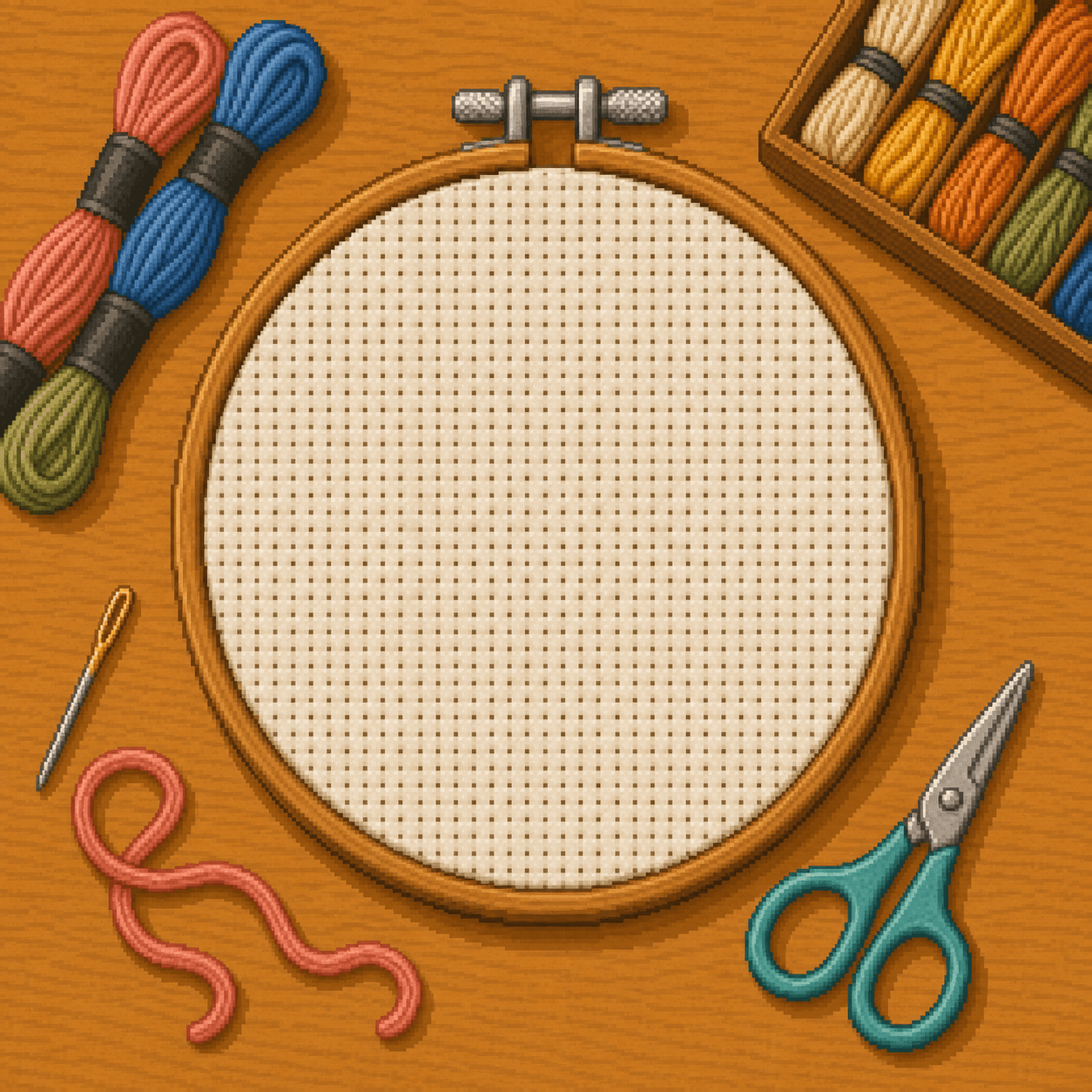
Set the fabric in a hoop or frame and tighten it until smooth. The fabric should be firm, but not stretched so hard that the weave distorts.
Step 3
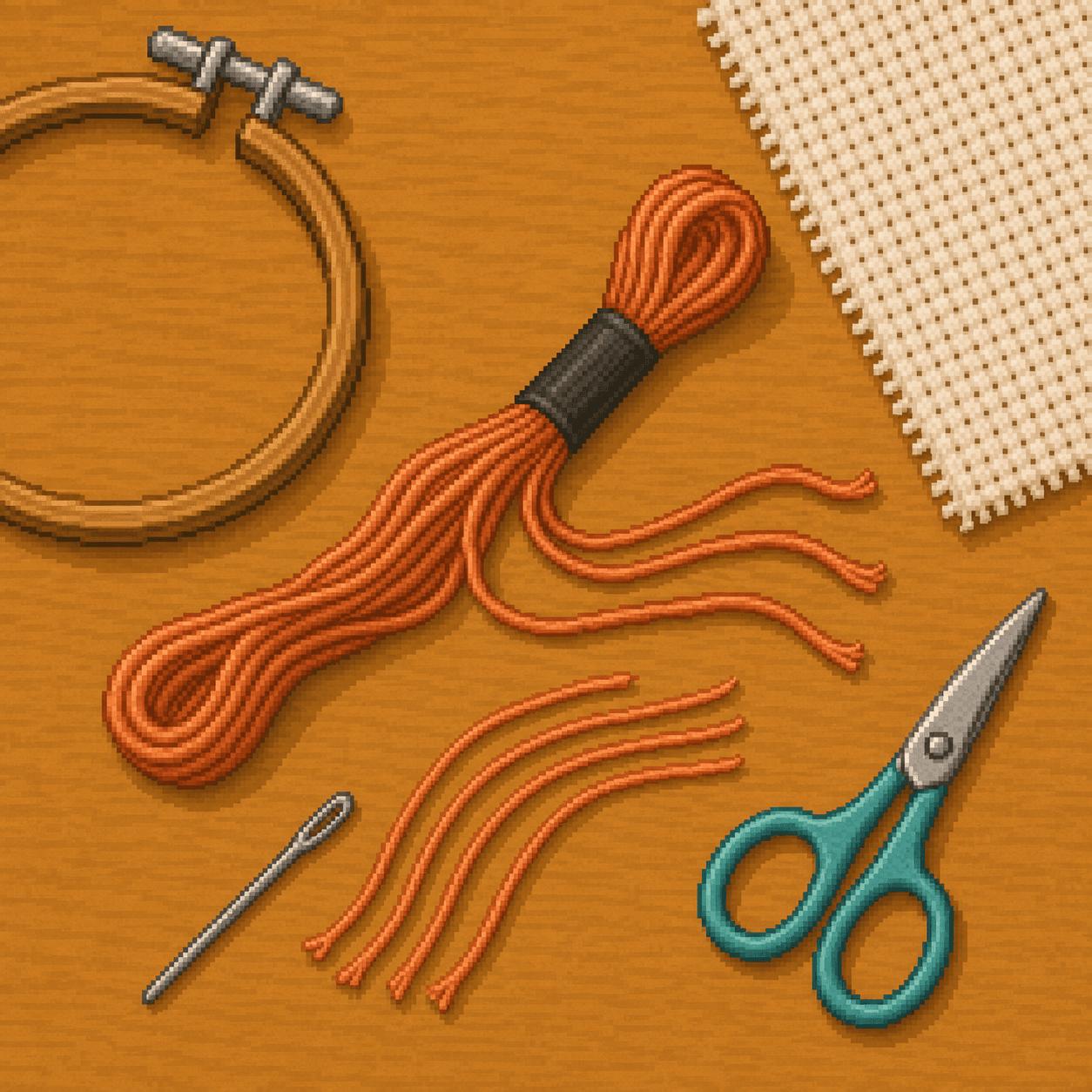
Embroidery floss usually has six strands. Pull out the number required by the pattern, commonly two strands for 14-count Aida. Separate the strands first, then bring them back together before threading the needle.
Technique
Work with short thread lengths, avoid knots, and keep the same top-stitch direction across the whole project.
Step 1
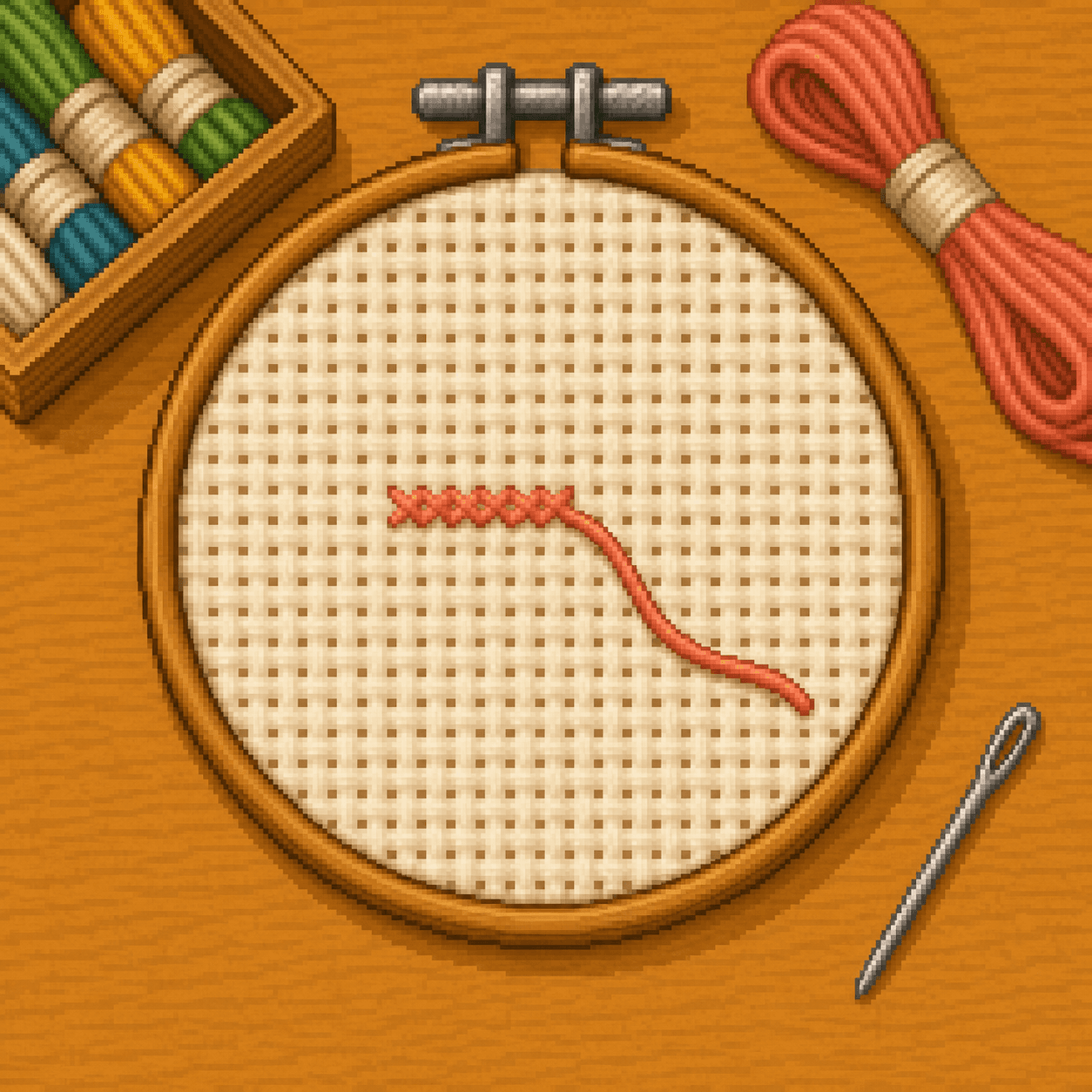
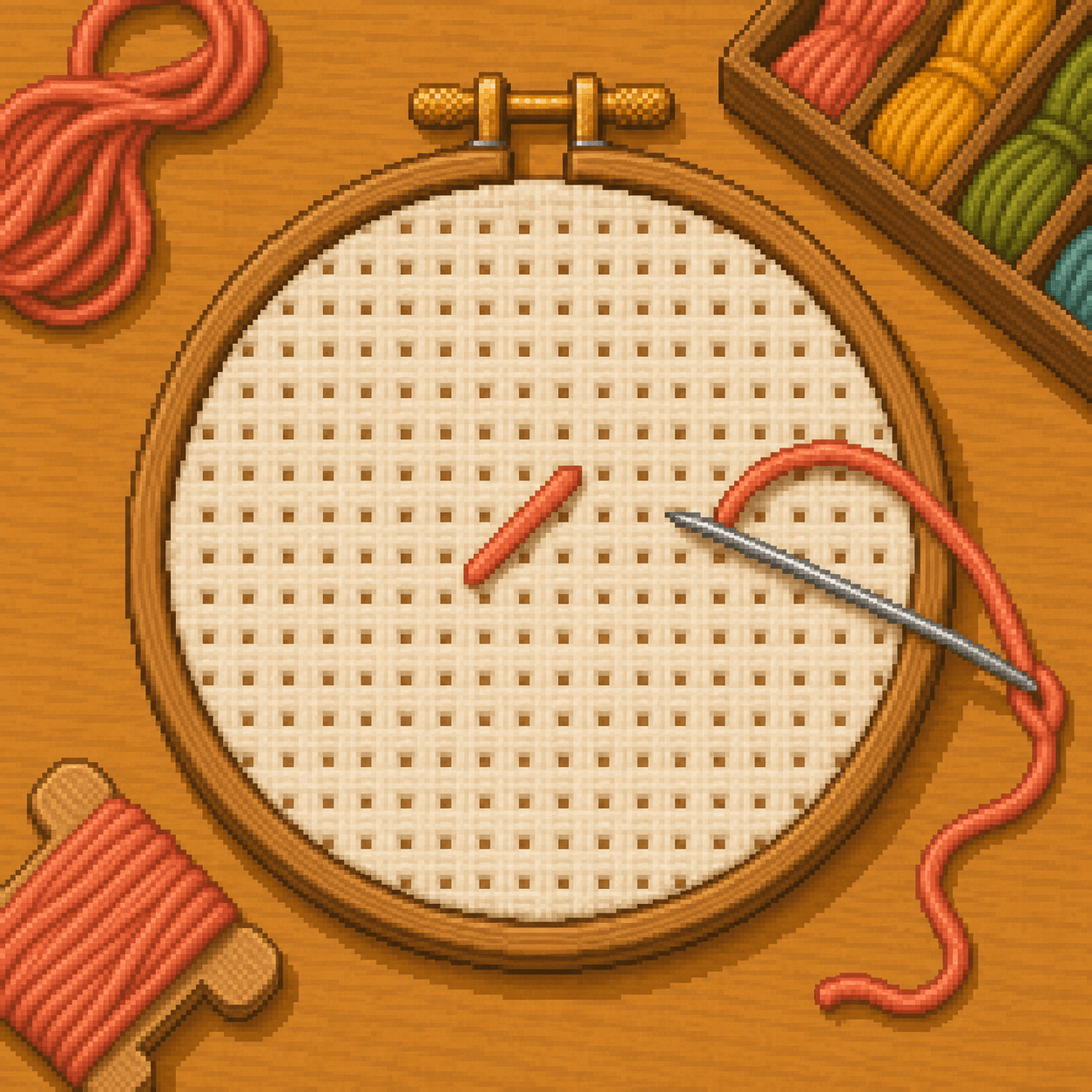
Bring the needle up from the back and leave a short tail. Hold the tail behind the fabric and cover it with your first few stitches. This keeps the back flatter than tying a knot.
Step 2
Stitch diagonally across one fabric square. Use the same bottom-stitch direction throughout the project.
Step 3
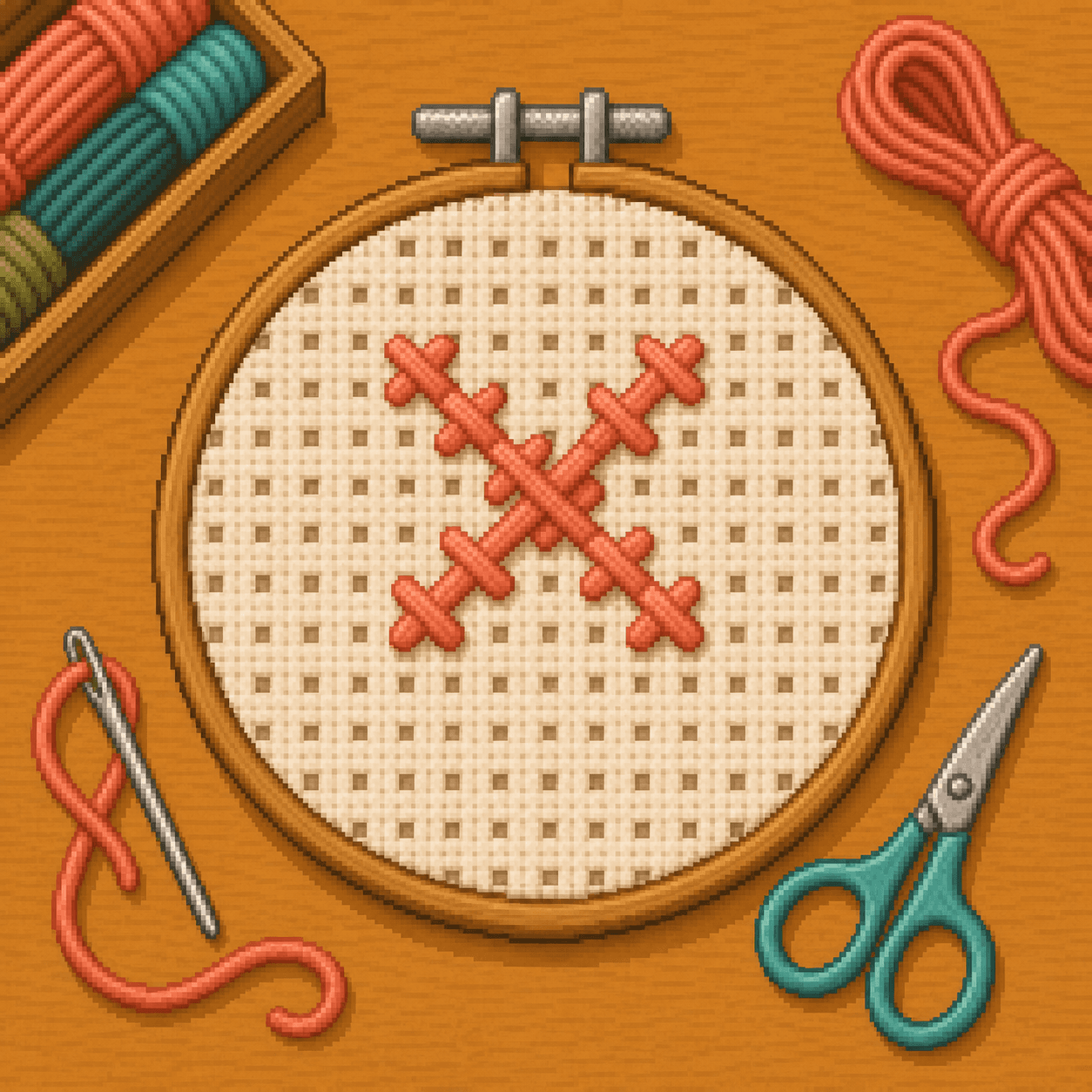
Stitch the opposite diagonal over the first half. Keep the top stitch direction consistent for every X so the finished design looks clean and even.
Step 4
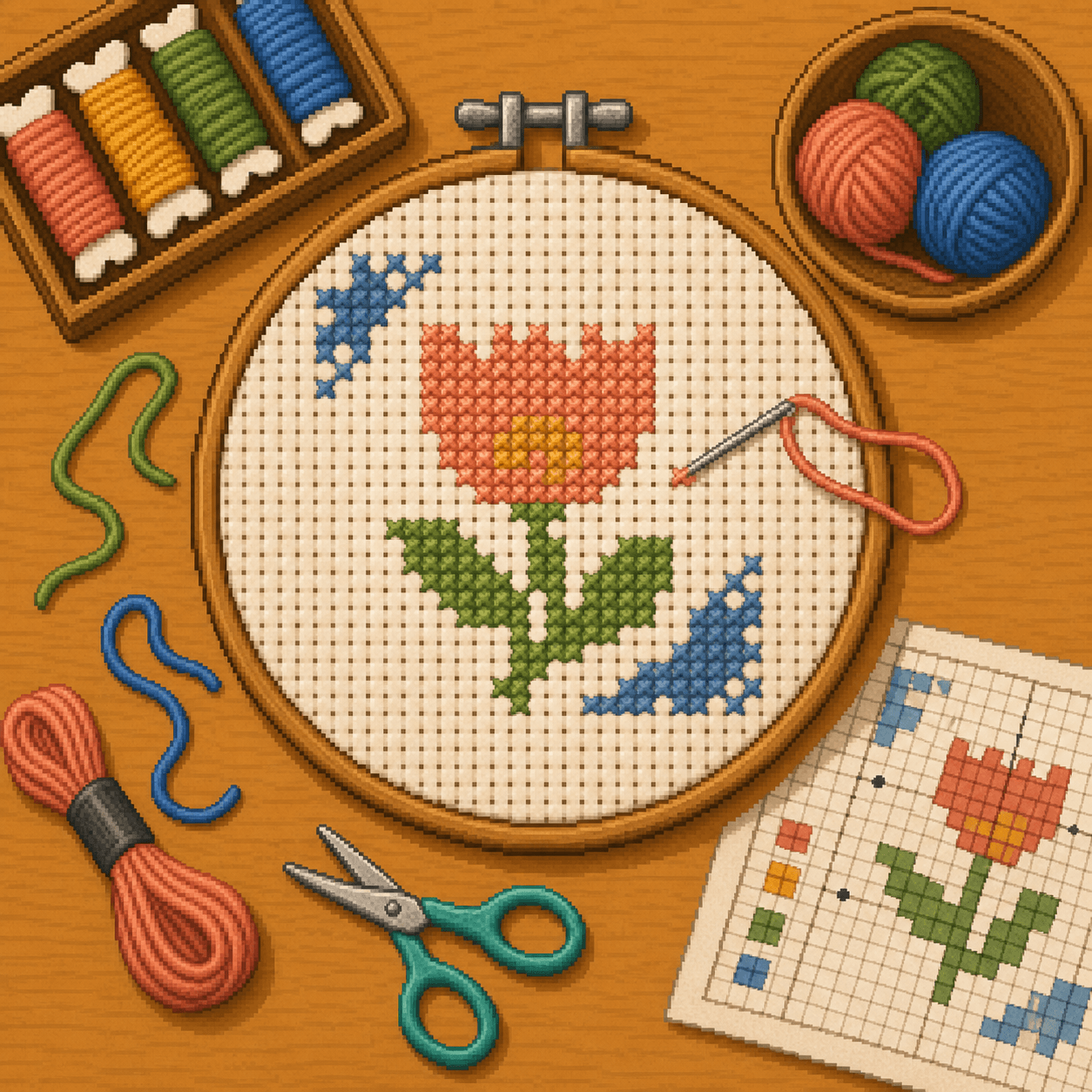
For pixel-style patterns, finish nearby stitches of one color before switching. Count carefully and check the chart often so the design stays aligned.
Step 5
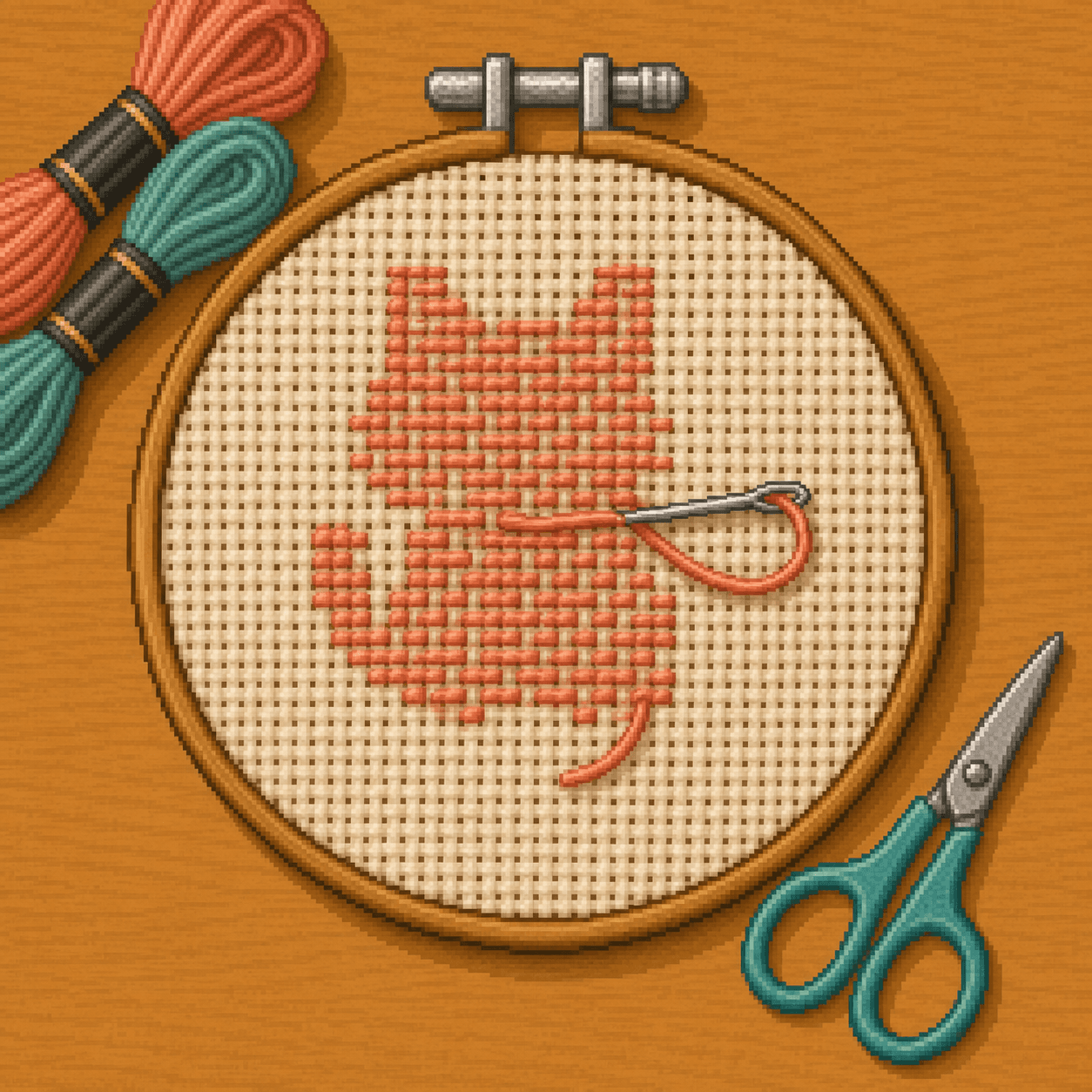
Run the needle under several stitches on the back, then trim the tail. Avoid knots because they can create bumps and make the finished piece harder to frame.
Final Step
Finish gently so the stitches remain neat and the fabric stays square.
Step 1
Check for missed stitches or counting mistakes before removing the fabric from the hoop.
Step 2
If needed, press from the back on a towel using low heat. Do not press heavily on the front of the stitches because that can flatten the texture.
Step 3
Frame the piece, finish it in a hoop, or sew it into a small project. Make sure the fabric is straight before securing it.
Step 4
Label leftover floss by color so repairs or future matching are easier.
Tip
Use thread lengths around 18 inches. Longer lengths tangle more easily, twist as you stitch, and can become fuzzy before you finish the section.
Beginner Help
Most beginner cross stitch problems come from counting errors, uneven tension, or thread issues. Watch for these common mistakes as you work.
Go slowly, count often, and keep your stitch direction consistent. Cross stitch is simple, but neat results come from small careful habits.
Materials
These basics are enough for most beginner cross stitch projects: Aida fabric, embroidery floss, a blunt cross stitch or tapestry needle, an embroidery hoop, and small scissors. A needle threader and floss organizer can also help, but they are optional.
Choose a beginner-friendly 8bit Crafts pattern, match your floss colors, and follow the chart one square at a time. Start small, keep your stitch direction consistent, and use this guide as you work through your first project.
Browse Cross Stitch Patterns