Step 1
Match the chart to the canvas
Review the pattern chart before cutting or latching. Each square on the chart represents one spot on the canvas grid. If your pattern includes symbols, match each symbol to the correct yarn color before starting.

Plush yarn texture
Turn a gridded pattern into a soft, plush yarn design. Latch hook uses short pieces of yarn and a latch hook tool to make knots on a grid-like canvas. Each square on the chart tells you which yarn color to place on the canvas.
Latch hook is beginner-friendly because the canvas grid and color chart do most of the planning for you. Once you learn the knot, the project becomes a simple repeatable process. When you finish your project, share it with us at 8bitcrafter on Facebook or 8bitcraftkits on Instagram.
Latch hook uses short pieces of yarn, a latch hook tool, and a grid-like canvas. The pattern chart works like a color map, showing which yarn color goes in each square.
The latch hook tool slides under the canvas threads, catches the folded yarn, and pulls the ends through the loop to create a knot. After many knots are added, the yarn builds into a soft, plush design.
Helpful supplies include latch hook canvas, a latch hook tool, yarn or pre-cut yarn pieces, scissors, the pattern chart, and an edge finishing method such as rug binding, fabric backing, craft glue, or optional UV resin.
Pre-cut yarn packs are the easiest starting point, especially when the pattern uses several colors. If you want to cut your own yarn, use a yarn cutter guide so each piece is a consistent length.
The cleanest latch hook projects come from organized colors, even yarn lengths, consistent knots, and a canvas edge that is protected before or after latching.
Setup
Prepare the canvas before you begin so the edges stay strong and the grid is easy to follow.
Step 1
Review the pattern chart before cutting or latching. Each square on the chart represents one spot on the canvas grid. If your pattern includes symbols, match each symbol to the correct yarn color before starting.
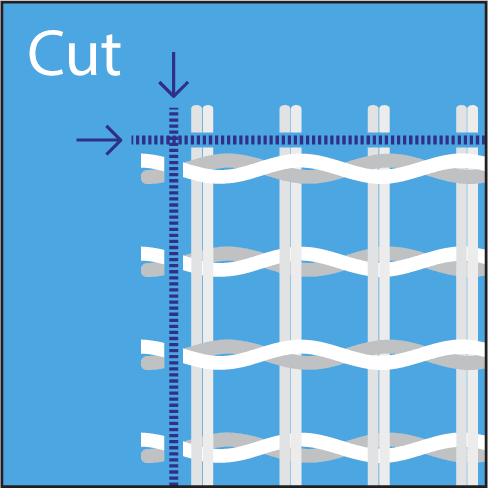
Step 2
Use the pattern canvas guide and leave a small margin around the edges. The extra margin gives you room to finish, fold, bind, glue, or reinforce the edge after the design is complete.
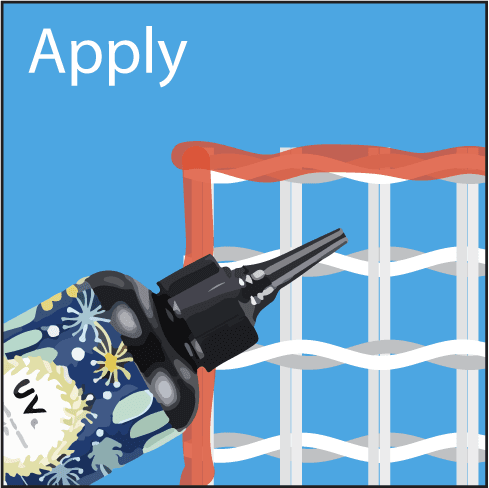
Step 3
Latch hook canvas can fray or pull apart when it is cut. You can protect the edges with rug binding, fabric backing, craft glue, or optional UV resin. Choose the finishing method that fits the project and how it will be used. If you use UV resin, cover your work surface, wear gloves and eye protection, work in a ventilated area, and follow the manufacturer's safety and curing instructions.
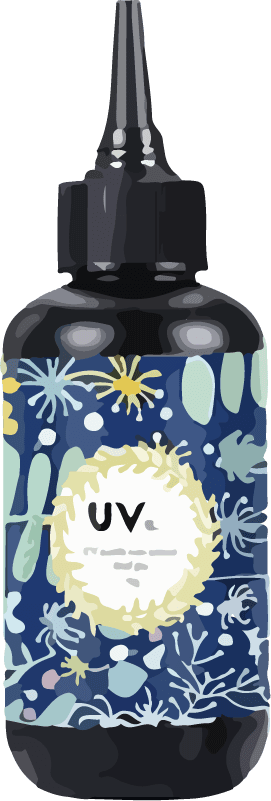
UV resin is a one-part resin that hardens when exposed to ultraviolet light. Some crafters use it to reinforce small areas, seal cut canvas edges, or repair weak spots.
UV resin is optional. Rug binding, fabric backing, or craft glue may be a better choice for many beginner projects, especially larger pieces or projects that will be handled often.
If you use UV resin, follow the product instructions carefully. Work in a ventilated area, protect your table, wear nitrile gloves and eye protection, and keep uncured resin away from skin, children, and pets. Cure the resin fully before handling the canvas or continuing the project.
Technique
Work row by row, starting near the bottom and moving upward. This helps keep finished yarn out of the way and makes it easier to see the next open canvas square.
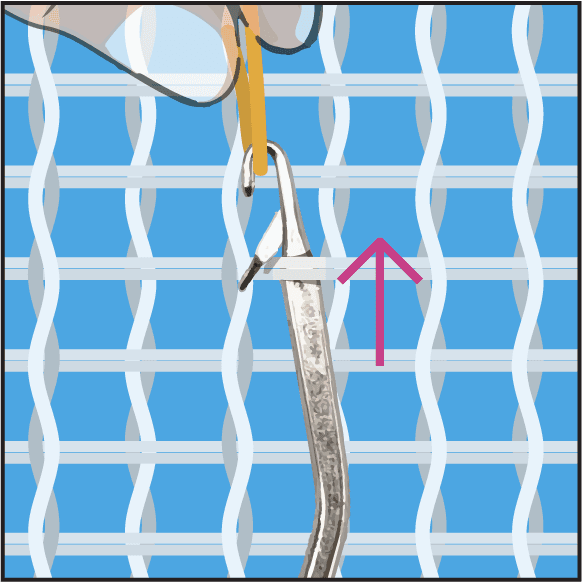
Step 1
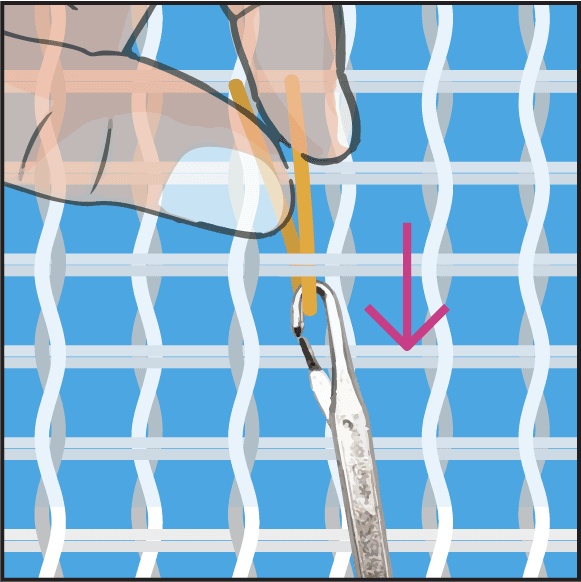
Insert the hook under the correct canvas thread until the latch passes through, then place the folded yarn over the hook.
Step 2
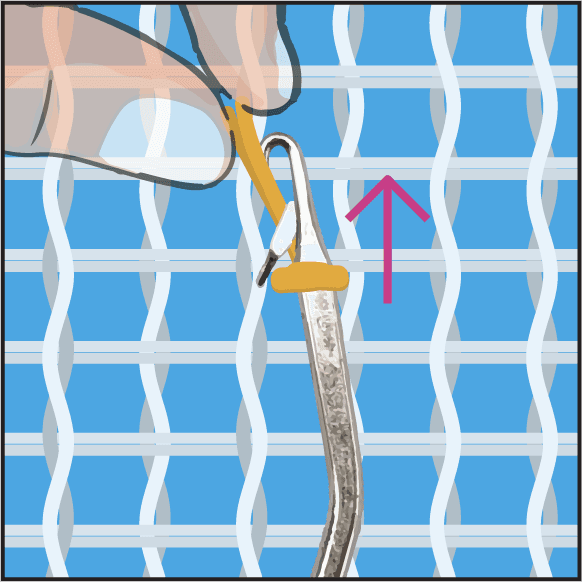
Pull the hook back to bring the folded yarn loop under the canvas thread.
Step 3
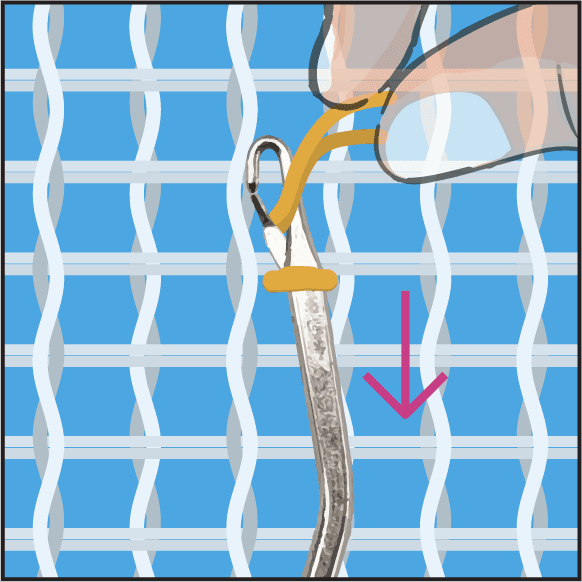
Push the hook through the yarn loop and catch both loose yarn ends.
Step 4
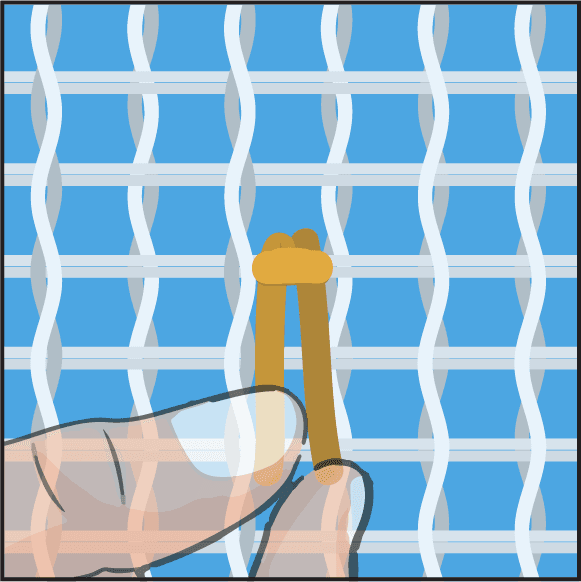
Pull the hook back so the yarn ends pass through the loop.
Step 5
Gently tug the yarn ends to tighten the knot against the canvas. Keep the tension firm but not so tight that the canvas bends.
Tip
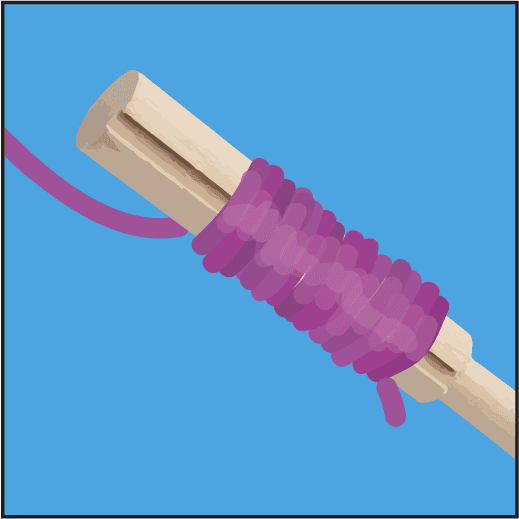
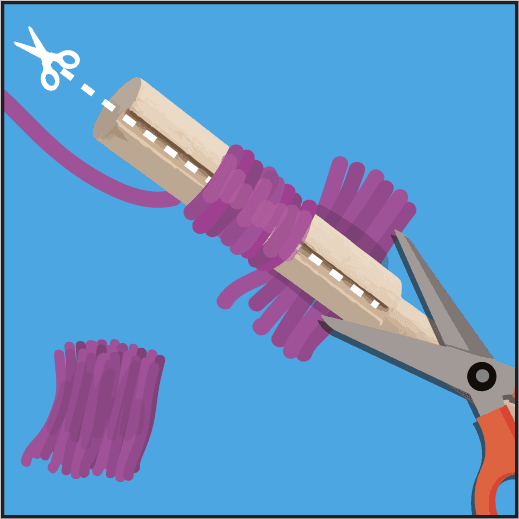
Consistent yarn length gives the finished design a more even texture. If you are using pre-cut yarn, you can skip this step. If you are cutting your own yarn, wrap the yarn around a yarn cutter guide, then cut along the guide so each piece is close to the same length. Keep each color grouped and labeled after cutting so it is easy to follow the chart.
Final Step
Choose a finishing method based on how the project will be used. Wall art, pillows, rugs, and decorative pieces may need different edge support.
Step 1
Look over the plush side for missed spots, uneven knots, or mixed-up colors before adding backing or binding.
Step 2
Fold, bind, glue, back, or optionally reinforce the canvas edge with UV resin. Let glue dry or resin cure fully before handling.
Step 3
Use fabric backing, rug binding, pillow backing, hanging hardware, or another finish that matches the project.
Step 4
If a few yarn pieces sit too high, trim only small amounts at a time so the surface stays soft and even.
Tip
Do not pull knots too tightly. Firm knots are good, but pulling too hard can stretch the canvas or make the grid uneven.
Work in small sections, keep your yarn colors organized, and check the chart often so mistakes are easier to catch early.
Beginner Help
Most latch hook problems come from tight knots, mixed-up colors, uneven yarn, or unfinished canvas edges. Watch for these common issues as you work.
If your canvas starts to pull apart during latching, pause and reinforce the weak area with a small amount of craft glue or UV resin, then let it dry or cure fully before continuing.
Materials
Start with the core latch hook supplies: grid canvas, a latch hook tool, yarn or pre-cut yarn pieces, scissors, and your pattern chart. A yarn cutter guide is useful when cutting your own yarn. UV resin and a UV flashlight are optional tools for small edge repairs or reinforcement.