Painted square patterns

Paint Blocks Getting Started

Turn a gridded color chart into clean, colorful square art. Paint Blocks use the same pixel-style patterns as our other crafts, but instead of stitching, placing beads, or cutting tiles, you paint each marked square onto a flat surface.

Paint Blocks are great for beginners, kids with supervision, classrooms, craft nights, and anyone who wants to make pixel-style art without yarn, beads, or stitching. When you finish your project, share it with us at 8bitcrafter on Facebook or 8bitcraftkits on Instagram.

Basic Tools and Materials

Paint Blocks use a gridded pattern as a color map. Each square on the chart tells you which color to paint in that space.

Acrylic craft paint is the easiest starting point because it is affordable, widely available, dries relatively quickly, and layers well. Small flat brushes give you better control along square edges than large round brushes.

Helpful supplies include acrylic paint, small flat brushes, the included printable transfer templates, graphite transfer paper, a pencil, ruler, painter's tape, a water cup, paper towels, and a clear sealer. Painter's tape is optional, but it can help protect long straight borders when your surface allows it.

The cleanest Paint Blocks projects come from thin coats, patient drying time, and organizing your colors before you start.

Backing Boards

Laser Cut Wood Backing Boards

If you have access to a laser cutter, you can use our laser cutting files to create a polished wood backing board for your pattern.

The files can cut the outside shape of the design and engrave light guide lines for the grid. This gives you a clean surface to paint while still following the same color chart.

Laser cutting is optional. You can also paint on sturdy paper, cardboard, canvas board, wood panels, or other flat surfaces. If you are not using a laser-cut board, use the included printable transfer templates to move the design onto your chosen surface.

Setup

Preparing the Surface

Start with a clean, dry, smooth surface. The smoother the surface, the easier it will be to keep your blocks neat.

Step 1

Choose your surface

Wood panels, sturdy paper, cardboard, canvas board, and other flat surfaces can work. If you are using wood, lightly sand rough areas and wipe away dust. If you are using paper or cardboard, choose something sturdy enough that it will not warp easily when paint is added.

Step 2

Use the printable transfer template

Use the included printable transfer templates to move the design onto your base material before painting. These templates give you a guide for the pattern shape and block layout so you do not have to recreate the grid from scratch. Place graphite transfer paper between the printed template and your surface, then trace the template lines with a pencil or stylus. Keep your guide lines light so they are easy to cover with paint.

Step 3

Organize your colors

Before you begin painting, match each paint color to the colors or symbols in the chart. Keep your paints, brushes, and pattern nearby so you do not lose track of which color goes where. If your pattern has many colors, work one color at a time or complete small sections at a time.

Technique

Painting Blocks

Use thin coats and deliberate edges. Do not worry if the first coat looks slightly uneven. A second light coat usually looks cleaner than one thick coat.

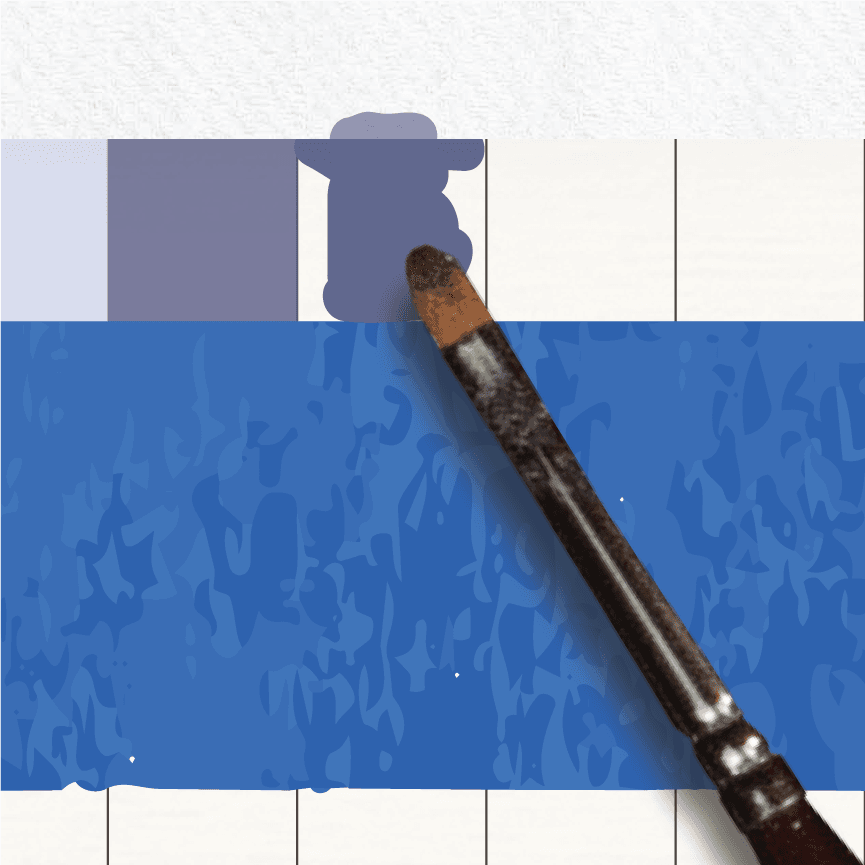
A small brush painting light coats inside a gridded paint block design.

Step 1

Paint light coats

Fill each block with a thin coat of paint. Let it dry before adding a second coat or painting a tight neighboring area. Thick paint can create raised edges, smudges, or uneven coverage.

A brush controlling paint edges along a taped painted block surface.

Step 2

Control the edge

Use a small flat brush for better control. For straight borders, painter's tape can help, but it works best when pressed down firmly and used with light coats. Brush parallel to or away from the tape edge to reduce bleed. For small interior squares, careful brush control is usually better than trying to tape every block.

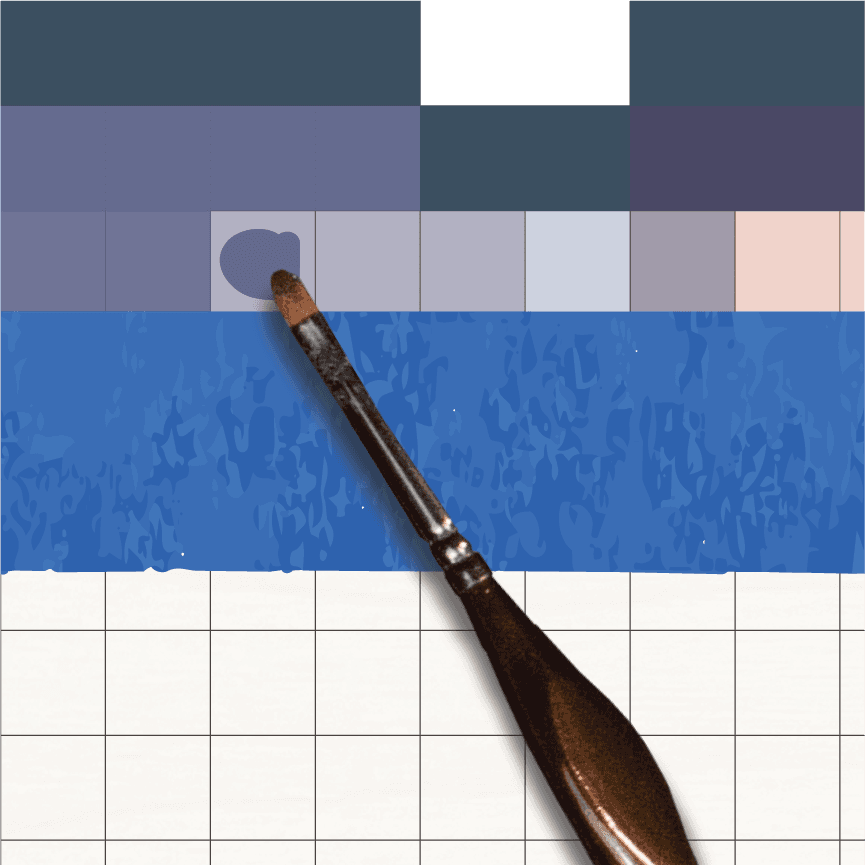
A large brush applying sealer over a completed painted block design.

Step 3

Clean up details

Once the paint dries, touch up any uneven corners or small mistakes with the surrounding color. Small imperfections are normal, and the full design will read clearly from a normal viewing distance. After the design dries fully, apply a compatible clear sealer if the project will be handled, displayed, or exposed to wear.

Tip

Paint Blocks Tip

Keep a spare dry brush or paper towel nearby so you can quickly lift extra paint from corners before it dries.

For cleaner results, paint from light colors to dark colors when possible, let neighboring blocks dry before painting tight edges, and rotate the project as you work so your brush hand stays comfortable.

Beginner Help

Common Beginner Mistakes

Most Paint Blocks issues come from too much paint, skipped drying time, or losing track of the chart. Watch for these common mistakes as you work.

  • Using too much paint instead of two thin coats
  • Skipping drying time before painting tight neighboring blocks
  • Trying to tape every square instead of using a small flat brush for individual blocks
  • Losing track of similar colors before matching paints to the chart
  • Forgetting to use the included printable transfer templates before painting

Use the printable transfer template to place the design on your surface, then use the color chart to decide which color belongs in each block.